




Finance the construction of a battery storage projects in Chile
The project Chile Calama Storage aims to finance the construction of a battery energy storage system (BESS) in Chile. This stand-alone BESS project is led by RelyAssets, a Spanish company specialized in the development, construction, and operation of battery storage and hybrid renewable energy projects worldwide, with an established presence in Poland, Italy, Chile, and Mexico.
The fundraising campaign seeks to raise an initial first tranche of 1.1 million euros, with a ceiling of up to 2 million euros and a total financing target of €4 million. The funds will cover the capital expenditure (CAPEX) needs for the construction of a BESS of 20 MW in northern Chile.
The offer
Objective
The operation aims to raise a first tranche of €1.1 million with a ceiling that can be increased up to €2 million. The total fundraising target is €4,000,000 in the form of senior debt.
Use of Funds
The funds will be used by Rely Assets to finance the CAPEX required to build the BESS.
Repayment
The repayment strategy is based on two options:
- Preferred option: bank refinancing and part of equity Once the battery is operational, the project will be able to secure long-term bank financing on optimal terms. A part of the repayment of the Total Energies Invest financing at maturity may be combined with an equity contribution from the sponsor.
- Alternative option: refinancing campaign As a complement to or alternative to bank refinancing, a refinancing campaign may be considered.
This funding can therefore be regarded as bridge financing: it enables the project to be launched and its operational viability demonstrated before it is refinanced on the basis of contracted and secured revenues.
Guarantees and legal mechanisms
The guarantees consist of a pledge over 100% of the shares of the Chilean special purpose vehicle (SPV COPIHUE BESS SpA).
1) Pledges covering 100% of the SPV’s share capital (the “Pledge”). A first-ranking pledge over all shares representing 100% of the SPV’s share capital, to be issued in Chile in accordance with Chilean law.
2) Pledge of 100% of the SPV’s assets: a first-ranking pledge over all the assets of the SPV, to be created in Chile in accordance with Chilean law.
3) Pledge over 100% of the Issuer’s shares: a first-ranking pledge over all the shares, representing 100% of the Issuer’s share capital, to be issued in Spain (together with the pledge over the SPV’s shares and the pledge over the SPV’s assets, the “Pledges”).
4) Joint and several guarantee by the SPV: the SPV undertakes to be jointly and severally liable – that is to say, in the event of an uncorrected default by the Issuer – in favour of the Bondholders, on an absolute, unconditional, irrevocable and joint and several basis, for the Issuer’s obligation regarding payments arising from the issue in favour of the Bondholders.
Financial Structure
- Issuance of simple bonds in Spain by COPIHUE NUEVO BESS S.A.
- Maturity of 2 years with an annual interest rate of 10%
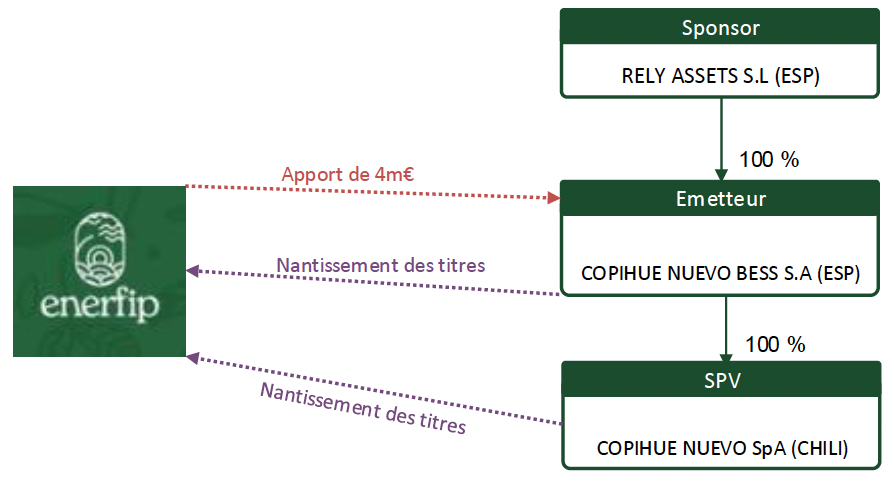
The total capital expenditure required to build the Chile Calama Storage project is approximately €12 million. Total Energies Invest’s fundraising targets €4 million, representing roughly one third of this amount. The remaining two thirds are funded through equity contributed by RelyAssets and supplier credit extended by the equipment provider, RelyEZ.
Specifications
Investment phases
- Investment open to everyone
End of project financing
Resources
Simulator
Investment simulation
Chile Calama Storage -
Obligation
10%/year over 2 years
Simulation - Rate : 10% / year on 2 ans
Initial investment:
€5,000
Repayments and interest:
€6,000
In 2 transfers
| Date | Interest* | Capital | Amount |
| 29/05/2027 | €500 | €0 | €500 |
| 29/05/2028 | €500 | €5,000 | €5,500 |
| Total | €1,000 | €5,000 | €6,000 |
|
*Gross interest before tax, including all fees ( view taxation ) The dates are indicative. The final dates will be available once the project is officially closed. The result presented is not a forecast of the future performance of your investments. It is only intended to illustrate the mechanics of your investment over the investment period. The evolution of the value of your investment may vary from what is shown, either increasing or decreasing. |
|||
Interested in this project?
Sign up now to invest responsibly
Announcements
Total Energies Invest x RelyAssets Webinar Replay
Discover everything you need to know about the Chile Calama Storage funding campaign with Emeric Gouraud and Olivier Potart from RelyAssets, as well as Maéva Faure and Manon Teneze from Total Energies Invest Spain.
Our experts answer all your questions about this project.
Don’t miss this opportunity to learn more and explore Chile Calama Storage in detail!
The project
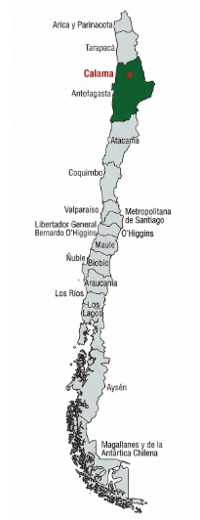
The project developed by RelyAssets involves the construction of a stand-alone battery energy storage system (BESS) in northern Chile, in the region of Antofagasta. This location is near the Atacama Desert.
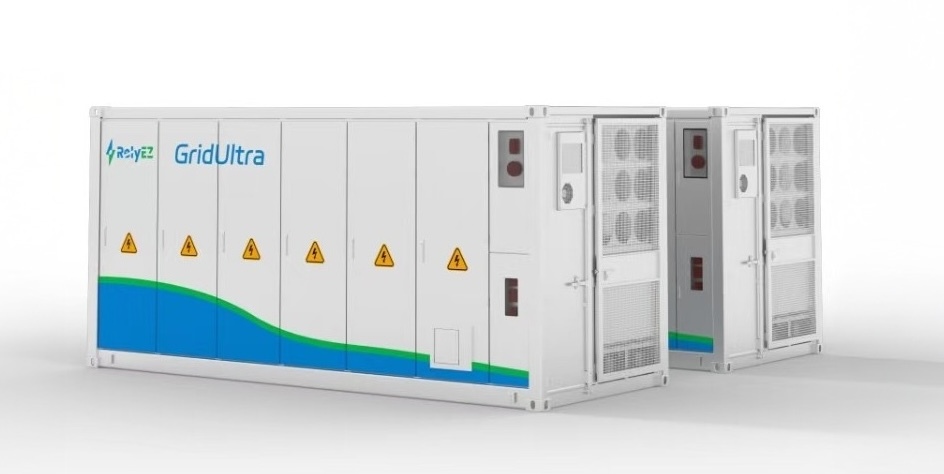
💡What is a BESS? A battery energy storage system (BESS) uses large-scale batteries to store electricity and release it when needed, helping to balance supply and demand, particularly as more renewable energy is integrated into the grid. By absorbing excess energy and supplying it during periods of peak demand, a BESS improves the stability and flexibility of the grid. It also provides services such as frequency regulation and reserve support.
Investing in this stand-alone BESS project in Chile reflects the ongoing evolution of the country’s electricity system, marked by a rapid expansion of renewable energy—particularly solar in northern regions. Chile’s power mix is already largely low-carbon (around 70%), with a strong contribution from variable generation.
This growth has created structural imbalances between supply and demand, leading to price volatility and renewable curtailment. In this context, BESS provides flexibility by storing excess electricity and supplying it when needed, supporting system balance and a more efficient integration of renewable energy.
Location of the project
Details and Technical Specifications of the Project
The battery project is currently Ready to Build (RTB) with an installed capacity of 20 MW. For the electricity sale strategy, BESS will have three main roles: a) absorb excess energy and supply it during periods of peak demand b) provide services such as frequency regulation and reserve support c) provide firm capacity to the system
|
Surface projet
(ha) |
Land Contract | Land Status |
Distance to connection point
(m) |
Connection Type | Grid Connection Voltage (kV) | Connection Status |
|---|---|---|---|---|---|---|
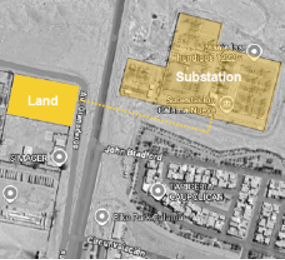
| 0,6 | Bail Foncier | Secured | 254 | Medium-voltage power line | 23 | Secured |
The project uses lithium-iron phosphate (LPF) battery technology, providing a total installed capacity of 80 MWh and a designed for 4 hours storage. LPF batteries are known for high thermal stability, shock resistance, and long lifespan. With an expected 20-years operational life, the system meets current market benchmarks for large-scale energy storage. LFP technology also supports reduced costs for EV batteries and extended longevity.
| Technology | Battery Type |
Power
(MW) |
Capacity
(MWh) |
Discharge duration
(h) |
Life Cycle
(years) |
|---|---|---|---|---|---|
| BESS stand alone | LPF + LI-ion | 20,0 | 80 | 4 | 20 |
Key stakeholders for construction
RelyEZ Energy Storage Technology will supply the battery energy storage system (BESS) for the project. The company is a Tier 1 BESS manufacturer, as classified by BloombergNEF, with products covered by performance guarantees backed by Munich Re insurance. RelyEZ delivers integrated storage solutions designed for utility-scale applications, supporting system reliability and project bankability. Its industrial expertise and standardized technology contribute to the technical robustness of the project.
A call for bids was issued in January with a shortlist of three candidates: ION, Tecton, and Andes Solar. These three companies have extensive experience in the construction and electromechanical installation of energy projects in Chile (each having completed between 30 and 60 projects). The final decision will be taken before May 15th. RelyAssets, through its local subsidiary Antuko will manage the key aspects of project execution including engineering, procurement of main equipment, and certification. With a strong presence in the Chilean energy market, Antuko has developed expertise in renewable and storage projects, enabling efficient coordination between technical design, permitting, and construction. This positioning supports the timely delivery and overall execution of the project.
Operation & Maintenance:
The operation and maintenance (O&M) standards for a battery energy storage system (BESS) of this size are relatively limited and focus primarily on preventive and corrective maintenance of the BESS, outsourcing of the control center serving as the interface with the grid operator, as well as security and monitoring services. RelyAssets, via Antuko, will coordinate the main O&M tasks together with RelyEZ, the BESS provider, through the Long Term Service Agreement (LTSA) and subcontracting certain key elements that require technical expertise, such as 24/7 control center, or site security monitoring.
What about Chilean Energy Market
Chile operates a nodal electricity market, meaning prices are set at each substation rather than at a national level. This design is intended to reflect local supply and demand conditions and to guide investment accordingly.
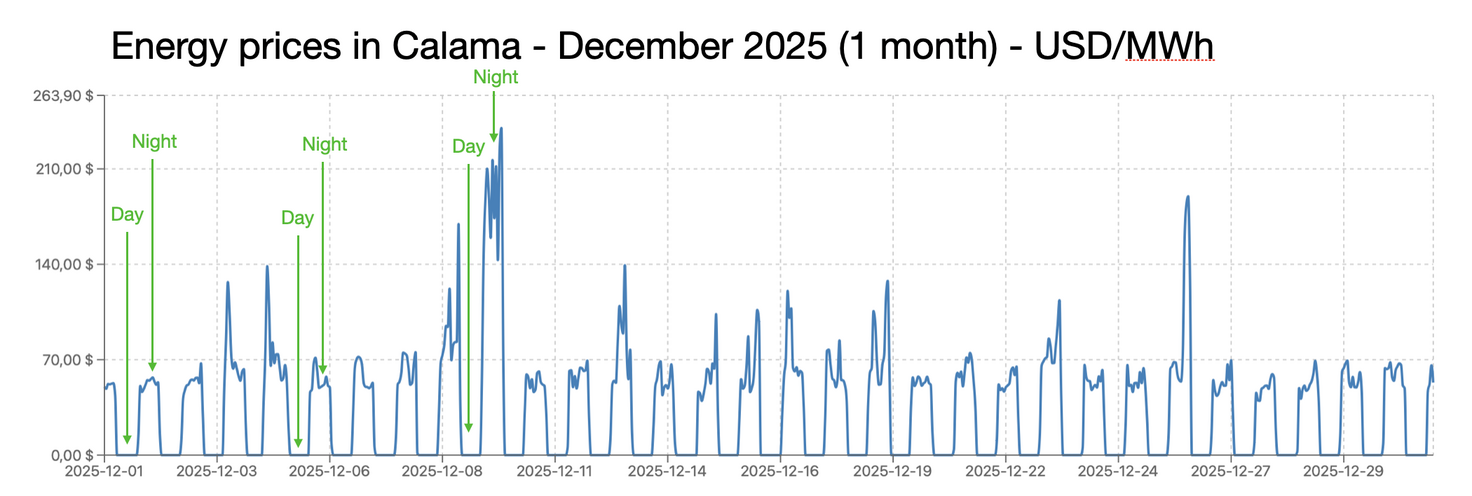
Over the past decade, Chile experienced rapid growth in renewable energy, particularly solar in the Atacama Desert, one of the highest solar irradiation zones in the world. However, this expansion was not accompanied by sufficient investment in transmission infrastructure. As a result, excess solar generation in the north cannot be efficiently transported to the main consumption centres around Santiago. This has created a persistent structural imbalance: nodal prices at the Calama substation (project location) consistently fall to near zero during solar hours, and rise to between $70 and $200/MWh at night , when demand is met by fossil fuel-based generation. This pattern has been in place for over eight years.
This price differential creates a clear use case for battery storage: charging during low-price solar hours and discharging during high-price evening hours, which is precisely the operating strategy of the Copihue Nuevo project. In addition, the Chilean government has introduced capacity payments for BESS installations , currently around $9,000/MW/month (approximately $100,000/MW/year), in recognition of the firm capacity and frequency regulation services they provide to the grid. This mechanism is expected to represent approximately half of the project’s projected revenues, providing a degree of revenue stability alongside market-based income.
Market Opportunities
These structural dynamics create opportunities for flexible assets within the electricity system. The increasing penetration of variable renewable energy requires solutions that can manage intermittency, optimize energy flows, and improve grid efficiency. In this context, storage plays a role in capturing excess generation and redistributing it over time, helping to reduce curtailment and align supply with demand.
Focus on BESS
Battery Energy Storage Systems (BESS) are becoming an integral component of the Chilean power system. They provide operational flexibility by storing surplus electricity and supplying it during periods of higher demand or lower production.
The development pipeline reflects this trend, with approximately 4.4 GW of standalone BESS projects at various stages of development and more than 1.5 GW already under construction or in operation. By January 2026, the capacity of storage systems under construction reached 7,278 MW, with an average runtime of 4.5 hours. Of this total, 75% consists of hybrid solar photovoltaic projects and 18% consists of standalone BESS projects.
Interested in this project?
Sign up now to invest responsibly
Project owners
RelyAssets specializes in the development, construction, and operation of battery energy storage systems (BESS) and hybrid renewable energy projects worldwide.
Among its co-founders and investors are the founders and owners of RelyEZ, a leading battery manufacturer with an annual production capacity of 20 GWh. This vertically integrated structure enables RelyAssets to control the entire value chain, from project development to equipment supply, significantly reducing manufacturer risk.
Currently, RelyAssets is transitioning from a development model to an Independent Power Producer (IPP) platform. In 2025, it merged with Antuko, a Chilean battery developer. The platform combines global leadership with expertise in the electricity market and structured financing across Europe and America. It also leverages its industrial capacity through its co-founders at RelyEZ, ensuring project bankability and technical validation. Projects are executed through partnerships with local development teams. As mentioned earlier, RelyAssets operates in four markets across Europe and Latin America, diversifying regulatory risks and mitigating price cannibalization between commercial and capacity markets, with a pipeline of 2.7 GW.
Since establishing its presence in Poland in late 2024, RelyAssets has rapidly executed its investment strategy, moving from market entry to transaction execution in under a year. A dedicated development team in Warsaw enables the company to bypass intermediaries and access off-market opportunities directly with local developers. Simultaneously, RelyEZ has deployed a local sales team that works in synergy with the development team to enhance market knowledge and accelerate sales. As a first transaction, the team successfully obtained all permits for the Pulawy project (4 MW), which is now under a separate financing arrangement through Total Energies Invest.
Our analysis
Risk overview
Construction risks
Risk of construction delays or failure to complete the work
Mitigation methods
RelyEZ is a reliable supplier that has demonstrated its ability to deliver in accordance with the specifications. The amount of connection work required is minimal due to the proximity of the site to the network connection point. The construction scope is limited: 18 containers are to be installed on a flat site, 250 metres from the substation, with a straightforward medium-voltage connection. The BESS equipment is currently in production and is expected to arrive in Chile in mid-August, with construction and grid connection scheduled for completion by early October.
Counterparty risk
Risk of counterparty payment default that would jeopardize the project's cash inflows
Mitigation methods
The financial capacity is in line with industry standards for a developer of this size. Furthermore, the management team has significant experience in developing energy projects, bolstered by the active support of its shareholder. This shareholder support provides additional leverage, both financially and strategically, and ensures stability in the project’s execution. One of the strategies is long-term bank refinancing; the sale of projects following completion is not ruled out. The distribution of the revenue generated by this project makes it bankable by partially guaranteeing a stable cash flow. In the event of default, Total Energies Invest may also enforce the security interests taken in connection with this financing, in particular the pledges over the asset and the issuing company.
Country risk
Risk of devaluation of local currency, which could impact revenues and compromise ability to service debt.
Mitigation methods
The currency risk associated with the volatility of the Chilean peso (CLP) can be mitigated by indexing to the US dollar (USD), particularly in relation to the price at which electricity is sold to the system operator, the CNE (capacity market), but also in relation to sales on the spot market (dollar-denominated energy market).
Country risk
Risk of policy change
Mitigation methods
Chile is the third-largest economy in Latin America and a member of the OECD (with credit ratings similar to Spain's, from S&P and Moody's). The regulatory framework is favourable to renewable energy projects (target of 45% renewable energy by 2030).
Development risk
Risk relating to authorizations issued to the company and land, and third-party appeals against authorizations issued.
Mitigation methods
The land contracts have been signed and notarised. The grid connection has been secured (the preliminary contract has been accepted, which is the most critical stage in the grid connection application process). The project developer is expecting the final contract by the end of May 2026 at the latest (the grid operator is subject to a statutory deadline for issuing it). Main planning and construction permits are obtained, and works could start now. In order to mitigate this risk, the disbursement of funds will be subject to Total Energies Invest’s assessment, taking into account the progress made in receiving the documents.
Natural hazards
Risk of natural disasters (storms, floods, droughts) that could cause damage or disruption to the project.
Mitigation methods
Climate-related risks (droughts, earthquakes, La Niña) are managed by selecting technologies suited to the local geography (solar power in the Atacama, wind power in Patagonia) and by integrating battery storage systems to stabilise the electricity grid. The project engineering and construction is being performed in accordance with Chilean seismic regulation.
Operating risks
Risk of poor project operation, faulty workmanship or machine breakdown resulting in poor performance.
Mitigation methods
Selection of proven technologies and reputable suppliers. Preventive and corrective maintenance contracts with equipment suppliers that meet industry standards (currently being finalised). Diversification of revenue streams, with a portion secured through fixed pricing on the Chilean capacity market. In order to mitigate this risk, the disbursement of funds will be subject to Total Energies Invest’s assessment, based on the progress made in signing the maintenance contract.
Operating risks
Technological risk that the system will not perform as expected, or that performance will degrade more rapidly than anticipated.
Mitigation methods
The technology provider is owned by one of the project's main shareholders, creating alignment of interests in project success. The Battery Supply Agreement includes a 15-year performance guarantee backed by Munich RE reinsurance (S&P rating: AA).
Investing in this participatory financing project involves risks, including the risk of total or partial loss of the capital invested. Your investment is not covered by the deposit guarantee schemes established in accordance with directive 2014/49/EU of the European Parliament and of the Council . Your investment is also not covered by the investor compensation schemes established in accordance with Directive 97/9/EC of the European Parliament and of the Council . Return on investment is not guaranteed. This is not a savings product, and we recommend that you not to invest more than 10% of your net assets in participatory finance projects. You may not be able to sell the investment instruments when you wish. If you are able to sell them, however, you may incur losses.