





Finance a municipal energy community according to EU directive 2018/2001 in Spain
The project Municipal Energy Community (ex Smart Energy Ayamonte) aims to finance 78% of the Capital Expenditure (CAPEX) required for the promotion and construction of an energy community according to EU regulations. The energy community will be located in Ayamonte, Spain and will be based in solar rooftop installations. This project is led by Avangreen, a Spanish company founded in 2006 with a mission to support public and private institutions in developing and implementing strategies for sustainable development, energy efficiency, and clean energy transition. The project is part of a local energy community initiative, with the city hall of Ayamonte acting as the lead partner.
Municipal Energy Community is the first project of a scalable model set to be replicated across Spain, with Avangreen’s vision to progressively roll out this energy community framework to municipalities nationwide.
The fundraising campaign will be conducted in a single tranche of €1,500,000 , financing the construction of a solar plant deployed across several sites with a total installed capacity of 1.5 MWp .
💡Energy Community?
An energy community is an open, voluntary, and locally rooted participatory entity, driven by citizens , small and medium-sized enterprises, and/or public authorities. Its primary purpose is to generate environmental, economic, and social benefits for its local area through the production, consumption, storage, management, or sharing of renewable energy.
This model aligns with EU Directive 2018/2001, which recognises renewable energy communities as a key instrument for placing citizens at the heart of the energy transition . In Spain, energy communities must be structured in accordance with the self-consumption and collective self-consumption framework governed, among other regulations, by Royal Decree 244/2019, which sets out the administrative, technical, and economic conditions applicable to electric self-consumption.
Why Ayamonte?
Ayamonte is a historic Spanish municipality located in the province of Huelva, Andalusia. With a population of 22,000, it is a key town in its region. It was selected for this investment due to its proven financial stability, certified by the Spanish State’s independent fiscal authority. The municipality acts as guarantor for the consumption of all the energy produced, ensuring the project’s economic sustainability. Additionally, the geographical location of the municipality in southern Spain guarantees the highest renewable energy production yields in Europe.
How does the Energy community model work?
-
Promotion and Investment
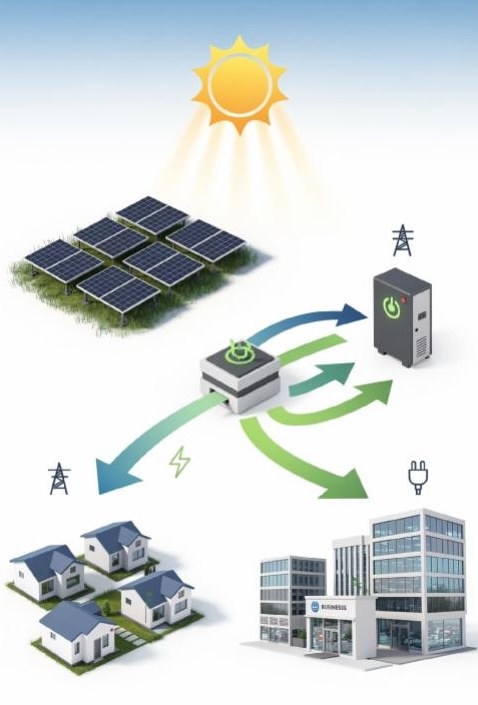
With advice from the Chambers of Commerce, an energy community is being set up in the municipality, comprising self-consumption solar installations on municipal rooftops. Avangreen finances 100 % (engineering, equipment, construction, regulatory compliance, commissioning) of the solar plants, and operates and manages them.
-
Generation and Distribution
Solar power plants generate energy which is distributed amongst the members of the energy community (including the local council). These members receive green energy with guaranteed savings. Any surplus energy is allocated to the local council.
-
Economic Flows
Community members receive the energy generated for their own consumption, with guaranteed savings of up to 25 %, in line with their current contracts. Avangreen receives a fee for the investment, financing and all services.
The offer
Objective
The operation aims to raise €1,500,000 in the form of senior debt.
Use of Funds
The funds will be used by Avangreen to finance 78% of the CAPEX of a 1.5 MWp rooftop solar plant across multiple sites.
Repayment
The refinancing strategy prioritizes bank refinancing once the model has been replicated several times to build a larger portfolio.
As a complement to or alternative to bank refinancing, a refinancing campaign on Total Energies Invest may be considered.
Security
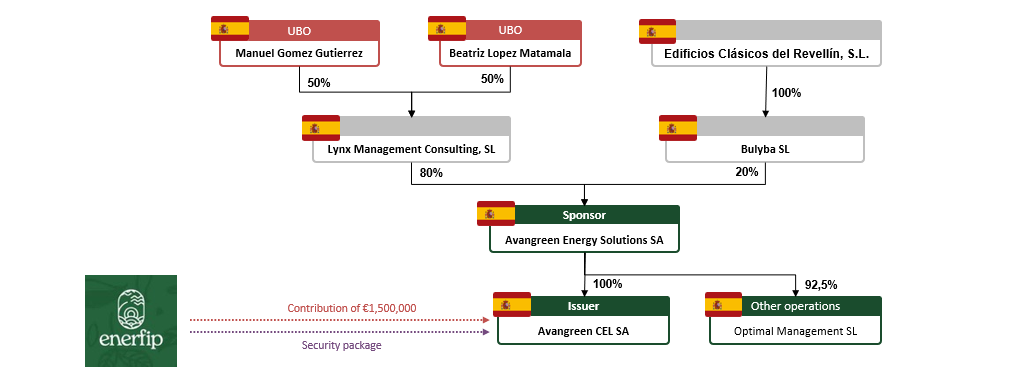
The security package consists of a 3 first-ranking pledges:
-
Pledge over 100% of the shares of the issuer (Avangreen CEL SA), held by the sponsor Avangreen Energy Solutions SA.
-
Pledge over the receivable rights arising from the EPC contract and other project agreements, in particular the Investment & Operation (I&O) Agreement and the Terminal Value.
- Pledge over the bank accounts of the borrower (Avangreen CEL SA).
Financial Structure
- Issuance of simple bonds in Spain by Avangreen CEL SA
- Maturity of 3 years with an annual interest rate of 9%
Specifications
Investment phases
- Investment open to everyone
End of project financing
The closing date for contributions may be extended at the request of the project owner.
The return on your investment will be calculated from the date the subscription certificates are generated, i.e. once all the funds have been received and the legal documentation has been signed by the project owner.
Resources
Simulator
Investment simulation
Municipal Energy Community -
Obligation
9%/year over 3 years
Simulation - Rate : 9% / year on 3 ans
Initial investment:
€5,000
Repayments and interest:
€6,350
In 3 transfers
| Date | Interest* | Capital | Amount |
| 15/07/2027 | €450 | €0 | €450 |
| 15/07/2028 | €450 | €0 | €450 |
| 15/07/2029 | €450 | €5,000 | €5,450 |
| Total | €1,350 | €5,000 | €6,350 |
|
*Gross interest before tax, including all fees ( view taxation ) The dates are indicative. The final dates will be available once the project is officially closed. The result presented is not a forecast of the future performance of your investments. It is only intended to illustrate the mechanics of your investment over the investment period. The evolution of the value of your investment may vary from what is shown, either increasing or decreasing. |
|||
Interested in this project?
Sign up now to invest responsibly
The project
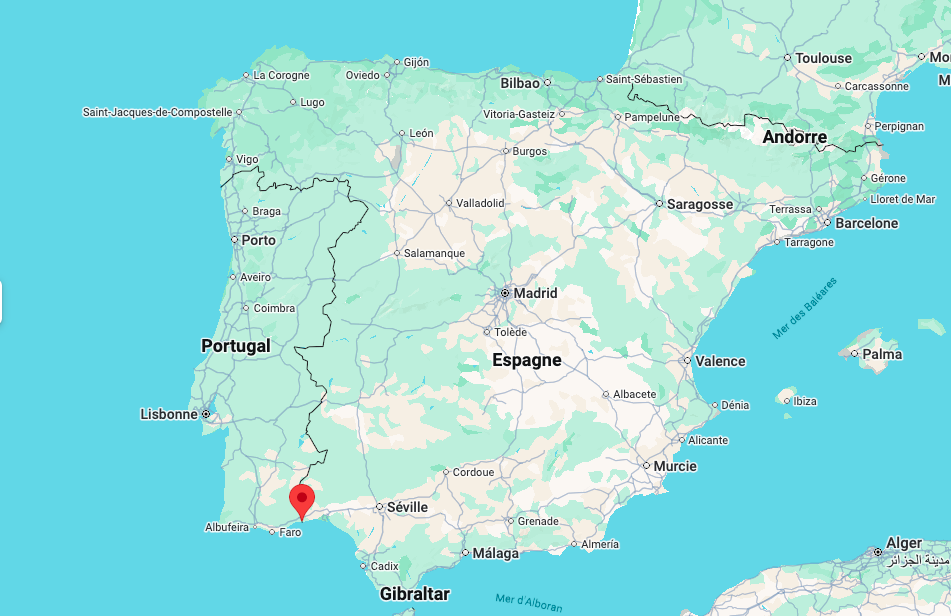
Project overview and location
The project developed by Avangreen involves the construction of 12 rooftop solar installations across the municipality of Ayamonte, in southern Spain. The project is structured as a Renewable Energy Community (REC), enabling local public institutions and businesses to benefit from locally produced clean energy at approximately 25% lower cost than market prices.
| Project technical key figures | |
|---|---|
| ⚡ | 7 installations > 100 kWp |
| 📋 | 4 installations > 1,000 m² |
| 📊 | 1,903 kWh/kWp Average yield |
| ☀️ | 2,186 kWh/m² Average irradiation |
Details and Technical Specifications of the Project
The project reached Ready-to-Build (RtB) status in January 2026, with an installed capacity of 1.466 MWp across 12 rooftops covering a total surface area of approximately 9,010 m². The estimated annual production is 2,792,754 kWh/year , sold at a fixed tariff of 120 EUR/MWh over 20 years .
| Location | Zone | Surface (m²) | Power (kWp) | Panels (€0.40) | Annual Production (kWh) | Yield (kWh/kWp) | Irradiation (kWh/m²) |
|---|---|---|---|---|---|---|---|
| Cultural Association Bda. Canela | Barriada Canela | 60.0 | 10.0 | 25 | 16,981.0 | 1,908.1 | 2,194.5 |
| Cultural Association Punta del Moral | Punta del Moral | 60.0 | 20.0 | 20 | 18,822.0 | 1,908.8 | 2,152.6 |
| Bus Station | Ayamonte Este | 1,000.0 | 180.0 | 320 | 305,080.0 | 1,906.8 | 2,191.7 |
| Blas Infante Municipal Stadium | Ayamonte Sur | 640.0 | 100.0 | 210 | 196,814.0 | 1,908.1 | 2,194.6 |
| Ciudad de Ayamonte Stadium | Ayamonte Centro | 1,050.0 | 130.0 | 300 | 247,916.0 | 1,906.3 | 2,190.1 |
| Punta del Moral Sports Hall | Punta del Moral | 800.0 | 130.0 | 280 | 244,694.0 | 1,882.3 | 2,152.8 |
| Antonio Carro Municipal Hall | Ayamonte Centro | 100.0 | 20.0 | 32 | 30,533.0 | 1,908.3 | 2,190.1 |
| Ayamonte Stadium Covered Hall | Ayamonte Sur | 1,700.0 | 280.0 | 540 | 534,279.0 | 1,906.1 | 2,194.6 |
| Convention Center | Ayamonte Norte | 900.0 | 200.0 | 350 | 376,368.0 | 1,908.2 | 2,195.1 |
| Municipal Swimming Pool (I) | Ayamonte Sur | 950.0 | 150.0 | 308 | 285,980.0 | 1,906.5 | 2,191.4 |
| Municipal Swimming Pool (II) | Ayamonte Sur | 300.0 | 50.0 | 100 | 95,327.0 | 1,906.5 | 2,191.4 |
| Local Swimming Pool | Ayamonte Centro | 300.0 | 60.0 | 100 | 95,412.0 | 1,906.2 | 2,194.8 |
| Average | 750.8 | 122.2 | – | 222,729.5 | 1,900.0 | 2,186.6 | |
| Total | 12 | 9,010.0 | 1,490.0 | 2,922 | 2,782,794.0 | 22,840.2 | 26,339.6 |
Renewable Energy Community (REC)
A Renewable Energy Community allows municipalities, local businesses, and citizens to jointly produce, consume, and share renewable electricity. In this model, the city hall acts as the lead conceding authority, making public building rooftops available for solar installation.
The Chamber of Commerce provides the validated legal framework and institutional support, while Avangreen handles 100% of the financing, engineering, construction, and long-term operation of the plants.
| Energy Communities | Key Figures |
|---|---|
| 👥 +659 Energy Communities in Spain | € ~€100 million Allocated to Energy Community implementation |
| 🏢 8.1% Municipalities equipped with an Energy Community | 🌿 +42.5% Target gross final green energy consumption by 2030 |
Focus on Ayamonte
Ayamonte is a municipality located in the province of Huelva, within the autonomous community of Andalusia, Spain. Situated at the mouth of the Guadiana river, directly on the border with Portugal, Ayamonte benefits from a strategic geographical position that supports a diversified local economy.
With a population of approximately 22,000 inhabitants and a stable demographic base, the municipality generates solid fiscal revenues from local economic activity. Its economy is driven by a dynamic tourism sector (Isla Canela beaches, marinas, golf), historically significant fishing and seafood industries, cross-border trade with Portugal facilitated by the ferry and bridge over the Guadiana river, as well as modest agricultural activity (204 hectares of arable crops).
The Ayamonte city hall represents a solid institutional off-taker for this project. With a politically stable majority, a growing budget and a steadily declining debt, the municipality offers a reliable financial counterparty. The Municipal Council has approved its 2026 budget, exceeding €36.5 million, an increase of €4 million compared to 2025, marking a return to normalized municipal economic management.
Key stakeholders
City Hall (Ayuntamiento de Ayamonte)
The city hall acts as the lead partner and conceding authority of the energy community. It pilots the project as a priority member, consuming locally produced solar energy and making public building rooftops available for the installation of the solar plants. Any surplus energy is allocated to ensure the economic stability of the project. From a financial standpoint, the city hall benefits from guaranteed energy savings of up to 25%, with no municipal investment or debt required. The model is legally proven, validated by the Chambers of Commerce, and fully compatible with existing energy self-consumption contracts.
Chamber of Commerce
The Chamber of Commerce provides the validated legal and administrative framework for the project. It supports the structuring of the Energy Community, recommends and endorses projects with local public administrations, and enables municipalities to join the community with full legal security. Its institutional credibility and local and regional presence are key assets for scaling the model across the territory.
Avangreen
Avangreen manages the full lifecycle of the project, from design to long-term operation, covering 100% of the investment with no financial contribution required from the municipality. It handles all engineering, procurement, and installation to the highest quality standards, assuming all project risks. Once operational, Avangreen transfers ownership of the plant to the conceding authority, which defers payment over 20 years via a predefined monthly fee covering all O&M costs.
Further reading
💡Article by Total Energies Invest: Energy communities in Spain
💡Article by Total Energies Invest: Taxation for spanish bonds
💡 Article by Total Energies Invest: Why invest in photovoltaics?
Interested in this project?
Sign up now to invest responsibly
Project owners
Designer and builder of tailor-made solutions for renewable energy and sustainable mobility.
Avangreen is a private, independent company with multinational experience, aiming to support public and private institutions in developing and implementing their sustainability, energy efficiency, and clean development strategies.
Founded in 2006 by professionals with backgrounds in major international energy, technology, and consulting companies, Avangreen focuses its efforts on developing and building sustainable infrastructures in three areas: renewable energy, digitalization, and clean mobility.
Its capabilities include engineering, development, construction, and operation of sustainable infrastructures, with a strong focus on renewable energy and the energy transition.
Over the years, Avangreen has built solid expertise in photovoltaic solar plant construction, having completed over 350 MW of engineering and delivered more than 150 installations as an EPC contractor (engineering, procurement, and construction). It also stands out in the design and construction of modular electric solutions for the energy and data processing sectors, with over 500 units delivered to date.
Based on a professional and independent model, Avangreen relies on an agile approach, combining technical expertise, innovation, and deep understanding of its industrial and institutional clients' needs.
The project developer in figures
+18 years
of activity in R&D and technology
18 countries
presence in Europe, Middle East, Africa, and the United States
+500
e-houses delivered to industrial sectors
+350 MWp
of engineering and construction capacity
20 data centers
development and investment in clean power plants in the Spanish market.
Our analysis
Risk overview
Construction risks
Risk that the connection to the distribution or transmission network has not been completed or is not approved by the relevant authority before the planned date of commercial operation.
Mitigation methods
The connection is made directly within the building at low voltage. The necessary work is therefore minimal and presents a very low risk. Avangreen is a company with solid experience in the construction of solar power plants.
Construction risks
Risk of construction delays or failure to complete the work
Mitigation methods
This is a small-scale project. Currently, there are a significant number of suppliers. Avangreen intends to select a Tier 1 supplier, and the selection will be made during construction based on product availability and market prices.
Counterparty risk
Risk of counterparty payment default that would jeopardize the project's cash inflows
Mitigation methods
Counterparty risk is significantly mitigated by the contract with the municipality of Ayamonte, a public entity with a strong credit profile. The long-term power purchase agreement secures revenue streams, while contractual clauses govern payment obligations and remedies in the event of default. Coordination risk is managed through a clear project structure centered on a lead entity (Avangreen) and the establishment of a defined governance framework for the energy community. The roles and responsibilities of each stakeholder are formalized in the contract, limiting the risk of misalignment.
Development risk
Risk relating to authorizations issued to the company and land, and third-party appeals against authorizations issued.
Mitigation methods
This risk is managed through continuous regulatory monitoring at the local, regional, and national levels, as well as through the support of legal counsel specializing in renewable energy in Spain. The project falls within the existing framework of energy communities, with local institutional support (city hall and chamber of commerce), which limits the risk of adverse developments. Appropriate contractual clauses also provide protection against potential regulatory changes. Risk management relies on structured monitoring of administrative procedures, with a precise timeline for obtaining permits and close coordination with local and regional authorities. Support from the municipality and institutional stakeholders facilitates the process, while time buffers are built into the schedule to account for potential delays.
Refinancing risk
Credit risk related to the company's ability to refinance and meet its debt obligations.
Mitigation methods
Refinancing risk is mitigated by arranging long-term financing aligned with the asset’s lifespan, reducing the need for interim refinancing. The stability of revenue streams provides sufficient visibility for lenders and secures financing terms from the outset. Liquidity risk is mitigated by the predictability of cash flows from the power purchase agreement with the municipality. Collateral risk is managed through the establishment of standard project finance guarantees, including, in particular, the pledging of contracts and cash flows. The quality of the counterparties and the contractual structure reinforce the strength of the collateral package for lenders.
Operating risks
Risk related to an activity that depends on a limited number of key persons responsible for carrying out the planned strategy. The risk is that one of these key persons leaves the project.
Mitigation methods
The risk related to the project developer’s experience is mitigated by the involvement of Avangreen, a company with a proven track record in the development, construction, and operation of photovoltaic projects. The presence of comparable references and a proven track record ensures the ability to successfully complete the project under controlled conditions. The project sponsor’s financial risk is mitigated by structuring the project as a special purpose vehicle (SPV) and by utilizing secured financing, thereby limiting reliance on the developer’s own financial strength. Revenue visibility through a long-term power purchase agreement enhances the project’s bankability and reduces the need for additional financial support. Organizational risk is managed through a clear division of roles among the various stakeholders, with Avangreen responsible for implementation and a defined framework for managing the energy community.
Operating risks
Risk of poor project operation, faulty workmanship or machine breakdown resulting in poor performance.
Mitigation methods
Maintenance risk is managed through the scheduling of regular preventive maintenance and the inclusion of dedicated budgets in operating costs.
Operating risks
Risk of poor yield estimation
Mitigation methods
Generation risk is mitigated by robust solar resource studies (P50/P90) and conservative assumptions incorporated into the financial model. The location in Andalusia, which benefits from high and stable sunshine, reduces uncertainty.
Operating risks
Technological risk that the system will not perform as expected, or that performance will degrade more rapidly than anticipated.
Mitigation methods
Technological risk is mitigated by the use of proven equipment from recognized manufacturers (Tier 1), backed by long-term warranties and a solid performance track record. The selection of standard, widely deployed technologies limits the risk of obsolescence, while contracts include product and performance warranties ensuring the durability of the installations.
Investing in this participatory financing project involves risks, including the risk of total or partial loss of the capital invested. Your investment is not covered by the deposit guarantee schemes established in accordance with directive 2014/49/EU of the European Parliament and of the Council . Your investment is also not covered by the investor compensation schemes established in accordance with Directive 97/9/EC of the European Parliament and of the Council . Return on investment is not guaranteed. This is not a savings product, and we recommend that you not to invest more than 10% of your net assets in participatory finance projects. You may not be able to sell the investment instruments when you wish. If you are able to sell them, however, you may incur losses.