





Fund the development of a solar and storage portfolio in Italy
The Solar Reserve project, led by NRG Plus France II aims to finance the development costs of a portfolio of photovoltaic projects and energy storage systems (BESS) located in several Italian regions, in a geographically diversified manner. The portfolio includes ground-mounted solar power plants, agrivoltaic projects, and storage units designed to enhance the flexibility of the electrical grid.
These projects, currently in the development phase , are expected to reach the ready-to-build (Ready-to-Build) stage through the completion of technical and environmental studies, obtaining the necessary administrative authorizations under the Italian regulatory framework , and securing grid connections with network managers .
This portfolio contributes to accelerating the energy transition in Italy , while strengthening the stability and security of the electrical system through the combination of renewable energy production and advanced battery storage solutions.
The NRG PLUS FRANCE II group is seeking to raise a first tranche of 1,000,000 euros at an interest rate of 9.5% , uncapped at 2,000,000 euros, as part of a total fundraising of 4,000,000 euros.
The offer
Invest in the development of a solar and storage portfolio in Italy
The group NRG Plus offers an investment opportunity in the financing of Solar Reserve , a portfolio consisting of 7 renewable energy projects , including 4 energy storage projects (BESS – 427 MW / 2,618 MWh) and 3 agrivoltaic projects (145 MWp), developed and owned by NRG Plus France II SAS through 7 individual SPVs in Italy .
Here is the scheme of the legal structure of the operation:
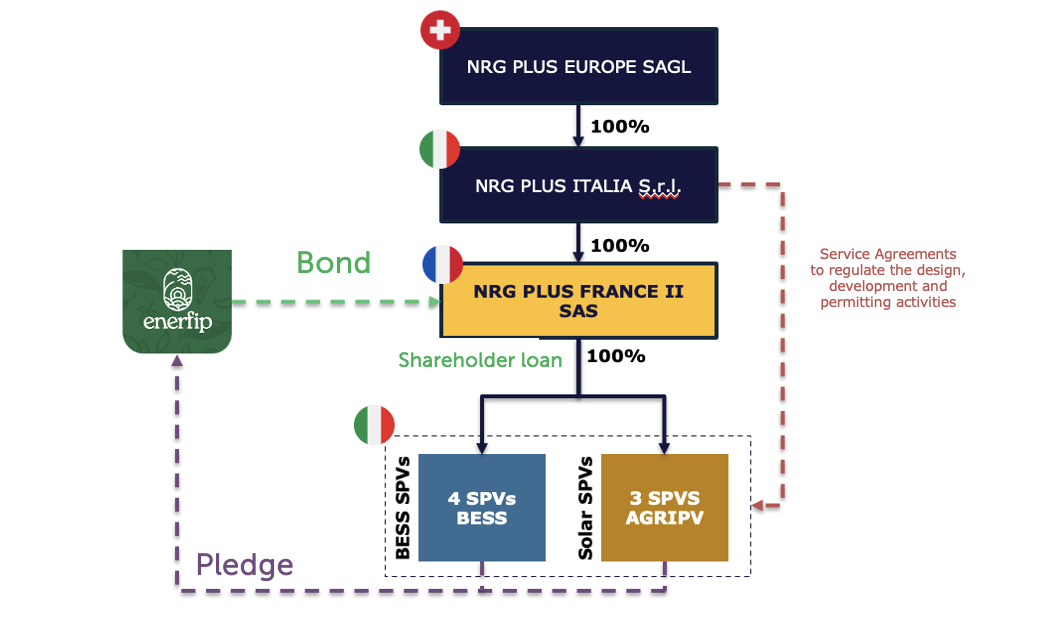
The crowdfunding operation led by NRG Plus France II aims to raise up to 4,000,000 euros in the form of simple bonds , intended to finance the development costs to bring the entire portfolio to the Ready-to-Build stage.
This first tranche , with a target amount of 1,000,000 euros at an interest rate of 9.5% , uncapped up to 2,000,000 euros. The bonds are issued by the French company NRG Plus France II, which directly owns the Italian project companies.
The repayment of the bonds is expected through the transfer of the SPVs of the projects once the projects reach the ready-to-build stage, or through the structuring of bank financing on the most advanced assets .
Investors benefit from a guarantee consisting of the pledge of 100% of the shares of the Italian SPVs held by NRG Plus France II , ensuring a level of security aligned with market standards for renewable energy infrastructure development operations.
Specifications
Investment phases
- Investment open to everyone
End of project financing
Resources
Simulator
Investment simulation
Solar Reserve -
Obligation
9.5%/year over 3 years
Simulation - Rate : 9.5% / year on 3 ans
Initial investment:
€1,000
Repayments and interest:
€1,285
In 3 transfers
| Date | Interest* | Capital | Amount |
| 30/01/2027 | €95 | €0 | €95 |
| 30/01/2028 | €95 | €0 | €95 |
| 30/01/2029 | €95 | €1,000 | €1,095 |
| Total | €285 | €1,000 | €1,285 |
|
*Gross interest before tax, including all fees ( view taxation ) The result presented is not a forecast of the future performance of your investments. It is only intended to illustrate the mechanics of your investment over the investment period. The evolution of the value of your investment may vary from what is shown, either increasing or decreasing. |
|||
Interested in this project?
Sign up now to invest responsibly
The project
The Solar and Storage Projects Portfolio
The Solar Reserve portfolio groups 7 renewable energy projects developed by NRG Plus :
-
3 agrovoltaic projects totaling 145 MWp , spread across Lombardy, Emilia-Romagna, and Apulia;
-
4 BESS (Battery Energy Storage System) projects representing 427 MW / 2,618 MWh , located in Emilia-Romagna, Apulia, and Molise.
All land has been secured for the development, construction, and operation of the projects, ensuring long-term territorial stability. Grid connection agreements have been obtained from the TSO (Transmission System Operator), guaranteeing the availability of the required capacity for the projects.
Technical, topographic, and environmental studies conducted to date confirm the viability of the sites, with no major restrictions identified.
The agrovoltaic projects follow the VIA (Environmental Impact Assessment) + AU (Single Authorization) procedure, while the BESS projects are subject only to the Autorizzazione Unica (AU) , which accelerates their permitting process.
The developer plans to continue the administrative process in 2025-2026 , with the goal of reaching the Ready-to-Build (RTB) stage between 2027 and 2028 , depending on the maturity of each project.
The portfolio’s location is strategically distributed in areas that feature:
- High solar irradiance,
- Growing demand for grid flexibility,
- Proximity to priority connection points.
These projects will actively contribute to boosting renewable energy production while enhancing the flexibility of the Italian grid, thanks to the 4 long-duration storage systems (8 hours) integrated into the portfolio.
Key Features of the 7 Projects:
- Total PV capacity : 145 MWp
- Total BESS capacity : 400 MW / 2,618 MWh
- BESS technology : Lithium-ion, 8-hour discharge duration
- Estimated lifespan : 20 years
- Current status : In development – land secured, grid connections obtained, permits in progress
- RTB target : 2027-2028
Project Development Cycle
The Solar Reserve portfolio follows a full development cycle , from land prospecting to the sale of projects at the Ready-to-Build (RTB) stage .
This multi-year process maximizes asset value while ensuring each technical, regulatory, and financial milestone is met.
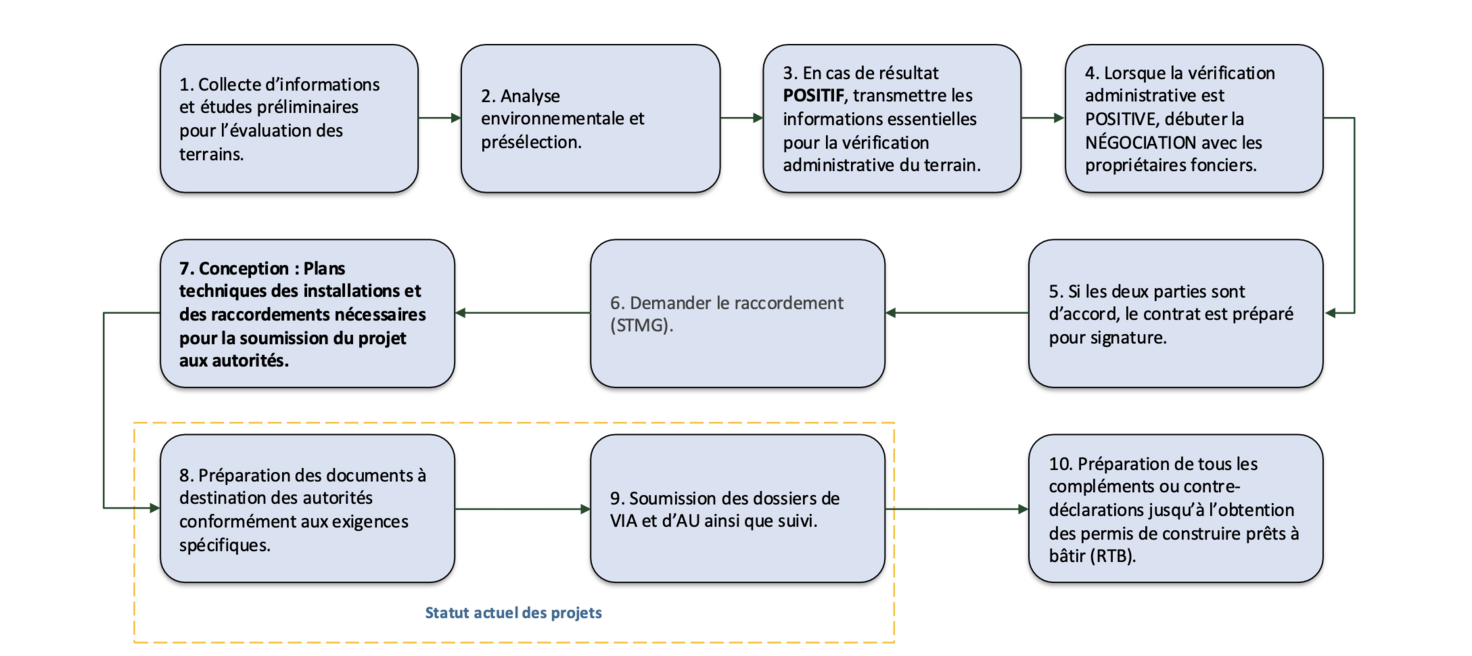
Project Timeline and Progress
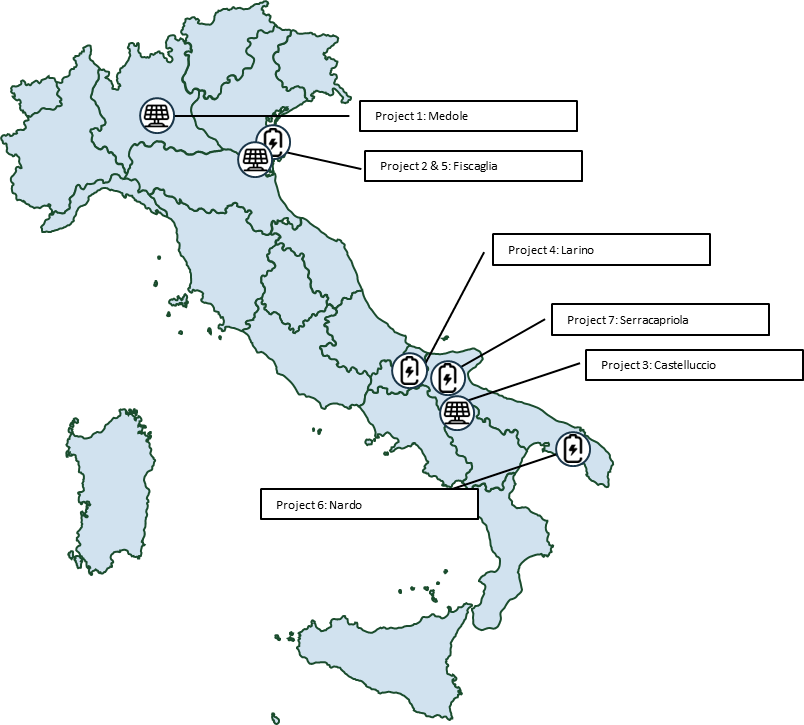
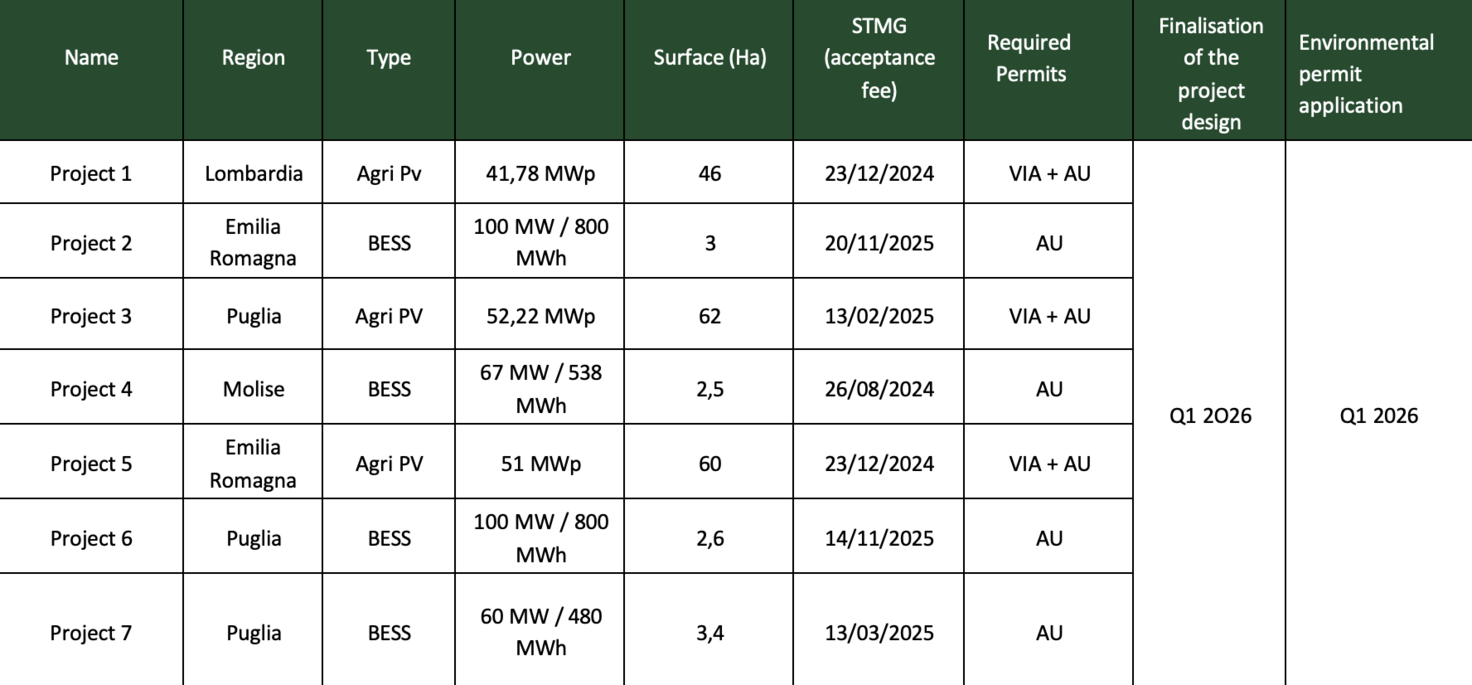
The 7 projects in the Solar Reserve portfolio are distributed across four Italian regions:
- Lombardy (1 agrovoltaic project),
- Emilia-Romagna (1 Agri-PV project and 1 BESS project),
- Apulia (1 Agri-PV project and 2 BESS projects),
- Molise (1 BESS project).
To date:
- Land has been secured for all projects , ensuring territorial control of the sites.
- Grid connection agreements (STMG) have been obtained for all 7 projects , with the acceptance fee paid, confirming electrical feasibility.
- AU/PAS (Single Authorization/Simplified Authorization) applications have been submitted.
- The RTB stage is estimated between 2027 and 2029 , depending on the maturity of each site.
Energy and Regulatory Context – Italy
In 2022 , approximately 83.7% of the energy consumed in Italy was imported , making it one of the largest net energy importers in Europe. The country’s electricity mix is highly carbon-intensive, with 44% of total electricity production generated from natural gas in 2024 .
To reduce this dependence, Italy has set ambitious targets for its energy transition, with renewables also accounting for 44% of total electricity production in 2024 . For this reason, Italy plans to deploy 44 GW of additional photovoltaic capacity by 2030 :cite[1], complemented by over 15 GW of standalone storage projects (BESS) :cite[2] to stabilize the grid.
Italy is now one of the most promising markets for energy storage systems (BESS) , driven by rapidly evolving regulations and the accelerated development of renewables. However, storage growth is not uniform across the country: some regions are already more mature, thanks to installed capacities, investments, and long-term contracts.
The chart below illustrates the regional distribution of storage , highlighting the most advanced areas as well as those with strong development potential.
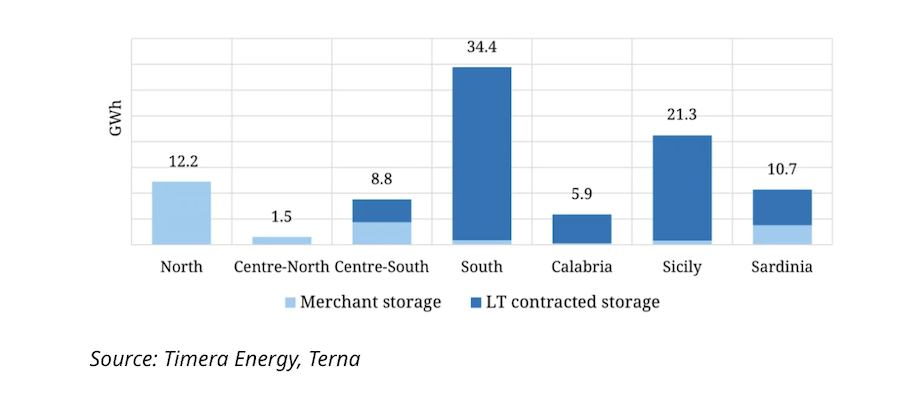
Since abandoning nuclear energy in the 1980s , Italy has relied heavily on energy imports. To strengthen its energy sovereignty , the country is pursuing an ambitious transition: the massive development of renewables and the integration of storage solutions to stabilize the grid.
Two key mechanisms support the deployment of BESS in the grid:
- The capacity market , which remunerates dispatchable production or flexibility resources during peak demand to ensure supply.
- MACSE , launched by Terna , which ensures real-time balancing of the electricity grid in response to the intermittency of renewables by contracting flexible capacities such as batteries.
These mechanisms enhance the attractiveness of the Italian market for photovoltaic and storage projects .
For more information on energy storage, read our BESS newsletter here .
Interested in this project?
Sign up now to invest responsibly
Project owners
NRG PLUS is an independent international renewable energy group, specializing in the development of solar photovoltaic systems, onshore wind, and battery energy storage systems (BESS) , as well as the construction and operation of renewable energy projects through its sister company Renergeia . Founded in 2019 , the group is currently successfully developing over 2 GW of renewable energy projects.
A Competent and Committed Team
The company is led by Pierluigi Borgogna , Founder and CEO , who has over 15 years of international experience in the energy sector in Europe and Latin America. He is supported by Angelo Romano , Director of NRG PLUS ITALIA , an expert in project finance and development.
With a large team of over 100 professionals active in Europe and Latin America , NRG+ brings together expertise in engineering, permits, land acquisition, legal, environmental compliance, and investment structuring .

NRG+ Italia operates under a vertically integrated model, covering the entire value chain, from project development to construction and long-term operations . Its internal subsidiary, Renergeia , provides EPC and O&M services , ensuring cost control and high-quality execution.
Proven Experience in Delivering and Selling Renewable Energy Assets
NRG+ has developed and sold more than 30 renewable energy projects with a total capacity of over 1.4 GW in Italy , including in Molise, Puglia, Tuscany, Emilia-Romagna, and Basilicata. The company maintains a strong focus on environmental and social responsibility as well as promoting local engagement from the early stages of development .
The company has implemented an integrated and structured approach to project development, covering all critical phases - from initial site prospecting, engineering, and design to the completion of authorization procedures . This development process is the result of years of experience, internal capacity building, and robust collaboration models. NRG+ has invested in building a team and system that allows them to manage the entire value chain in-house – site prospecting, permits, network management, design, and project management.
This approach ensures efficiency, consistency, and control over the pipeline. It also provides transparency and reliability to partners, as all phases are traceable, documented, and led by professionals with in-depth expertise in the renewable energy sector in Italy .

A Long-Term Vision for the Energy Transition
With a growing presence in Africa and Asia , NRG+ aims to become a key player in the global energy transition. The company focuses on developing high-impact, sustainable, and investment-ready projects that support the transition to a low-carbon economy.
Our analysis
Risk overview
Counterparty risk
Risk of counterparty payment default that would jeopardize the project's cash inflows
Mitigation methods
At the intermediate stage of project development, the developer will prepare a comprehensive vendor due diligence documentation package for potential buyers. The Project Sponsor will also begin engaging the market at an early stage to assess interest and ensure that the quality of the projects meets the requirements of potential investors. The portfolio has already been valued using conservative assumptions to reduce the risk that the proceeds would be insufficient to repay the debt. A maximum loan-to-value ratio of 20 percent must be respected. In the event of default, investors are also secured by a pledge over 100 percent of the SPVs. This pledge allows for the sale of the Project Sponsor’s projects, with the proceeds used to repay investors. Total Energies Invest also holds a consent right over the sale of the project SPVs. To further strengthen risk mitigation, the progress of previous projects developed with the same group will be reviewed prior to any capital disbursement. Funds will only be released following a positive assessment.
Country risk
Risk of policy change
Mitigation methods
The renewable energy sector in Italy benefits from strong political support across a broad spectrum of the political landscape, with bipartisan government initiatives aimed at accelerating the energy transition. The country has committed to achieving carbon neutrality by 2050 by increasing the share of renewable energy in its electricity and overall energy mix, which remains heavily carbon-intensive today. Geostrategic considerations related to energy independence and the trade balance, particularly the need to reduce imports of foreign fossil fuels, further support the accelerated deployment of renewable energy. Significant investments are also planned to modernise infrastructure and the power grid to integrate more green energy sources, notably through energy storage projects and incentives for energy communities. Portfolio resilience is further strengthened by the development of projects using a range of different technologies, helping to diversify regulatory risks.
Development risk
Risk relating to authorizations issued to the company and land, and third-party appeals against authorizations issued.
Mitigation methods
This risk relates to the granting of permits, land rights, and potential third-party appeals that could delay or prevent project advancement. To mitigate this risk, the Project Sponsor follows a rigorous development process that includes careful site selection, early engagement, and ongoing dialogue with local stakeholders and authorities. The team is composed of qualified in-house experts in legal, technical, and environmental fields, ensuring strong execution capability throughout the permitting phase. A loan-to-value (LTV) monitoring mechanism, together with a pledge, is in place to protect investor returns in the event of delays or underperformance.
Regulatory risks
Risk of changes in regulations applicable to the sector, involving reductions in subsidies or new taxes with a significant impact on project revenues.
Mitigation methods
Regulatory frameworks can influence development timelines and the future valuation conditions of photovoltaic and energy storage projects. In Italy, the regulatory framework applicable to energy storage is evolving rapidly with the aim of clarifying and improving the remuneration mechanisms available to BESS projects, notably within the MACSE framework and the capacity market. Similarly, the country has set ambitious targets to increase its photovoltaic capacity, structurally supporting demand for new projects. To mitigate the potential impact of regulatory changes, the valuation assumptions used in the financial model are conservative: no public support schemes or additional remuneration mechanisms have been included, although the projects could potentially benefit from them in the future. The Solar Reserve portfolio has also been structured in a diversified manner, combining several regions and two different technologies (Agri-PV and BESS), in order to reduce exposure to localised regulatory decisions. In parallel, the Project Sponsor implements continuous regulatory monitoring at both national and regional levels. This enables the early identification of any legal or administrative changes that could affect permitting procedures or revenue models, and allows the development strategy to be proactively adjusted to ensure compliance and optimise the future valuation of the projects.
Investing in this participatory financing project involves risks, including the risk of total or partial loss of the capital invested. Your investment is not covered by the deposit guarantee schemes established in accordance with directive 2014/49/EU of the European Parliament and of the Council . Your investment is also not covered by the investor compensation schemes established in accordance with Directive 97/9/EC of the European Parliament and of the Council . Return on investment is not guaranteed. This is not a savings product, and we recommend that you not to invest more than 10% of your net assets in participatory finance projects. You may not be able to sell the investment instruments when you wish. If you are able to sell them, however, you may incur losses.