



Support the growth of green hydrogen in Spain with a 5 MW electrolyzer
The project H2 Green La Isla aims to finance the phase 2 of a technical optimization and performance improvement of a hydrogen production unit in Sevilla, Spain. This hydrogen project is led by SailH2 Energy SL, a Spanish company specialized in the development and promotion of large-scale green hydrogen projects, primarily aimed at decarbonising industry and heavy transport.
The fundraising campaign seeks to raise an initial first tranche of €1,000,000 , with a total financing target of €4 million. The funds will cover 44% of the capital expenditure (CAPEX) required for the hydrogen site located in Seville area, Spain.
The offer
Finance the scale-up of a Spanish green hydrogen production platform through a 5 MW electrolyzer expansion and operational optimization.
Objective
The operation aims to raise a first tranche of €1,000,000 with a ceiling that can be increased up to €2,000,000 . The total fundraising target is €4,000,000 in the form of senior debt.
Use of Funds
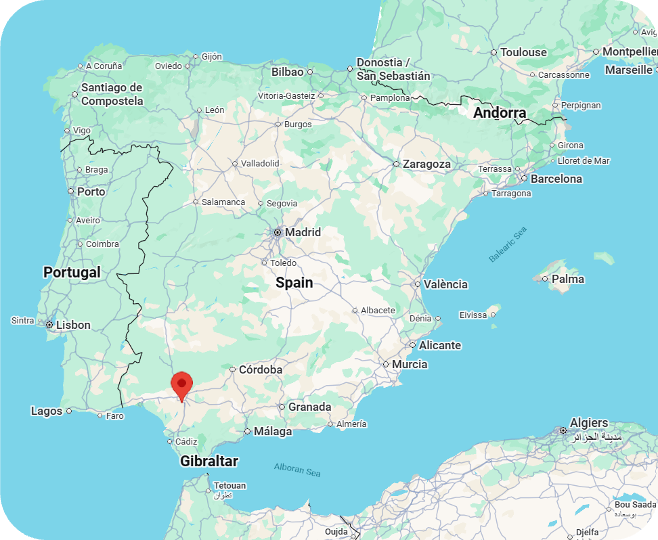
The funds will be used by SailH2 Energy SL to finance 44% of the capital expenditure (CAPEX) required to optimise a hydrogen production and distribution site located in Seville area, Spain.
Repayment
The repayment strategy is based on two options:
-
The cash flows generated from the sale of hydrogen will enable the company to repay the main part of debt and cover interest payments. The remaining portion will be covered through shareholder loans or capital increases.
-
The contract includes the option to refinance through a new crowdfunding campaign.
Security
The guarantees consist of :
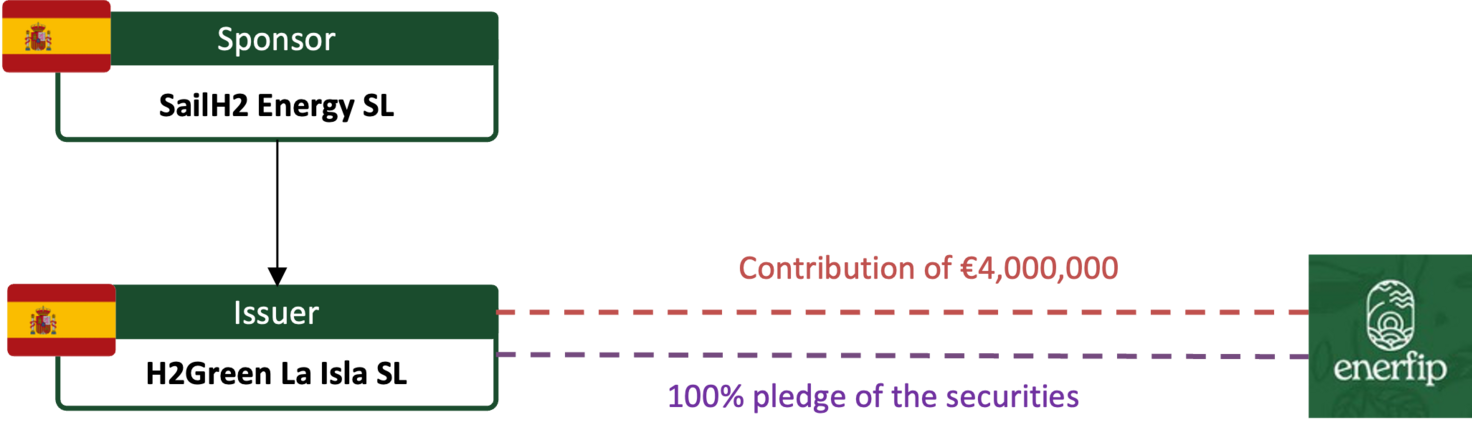
- Pledge of 100% of the shares of the issuing company H2Green La Isla SL.
If the fundraising target is not fully reached within 9 months (extendable by 3 months if €3M has already been raised), the pledge is partially released in proportion to the shortfall. A minimum pledge of 51% of share capital is maintained at all times.
Financial Structure
-
Issuance of simple bonds in Spain by H2Green La Isla SL
-
Maturity of 4 years with an annual interest rate of 11%
-
100% pledge of the shares of the Spanish issuing company H2Green La Isla SL.
Specifications
Investment phases
- Investment open to everyone
End of project financing
Resources
Simulator
Investment simulation
H2Green La Isla -
Obligation
11%/year over 4 years
Simulation - Rate : 11% / year on 4 ans
Initial investment:
€5,000
Repayments and interest:
€7,200
In 4 transfers
| Date | Interest* | Capital | Amount |
| 01/07/2027 | €550 | €0 | €550 |
| 01/07/2028 | €550 | €0 | €550 |
| 01/07/2029 | €550 | €0 | €550 |
| 01/07/2030 | €550 | €5,000 | €5,550 |
| Total | €2,200 | €5,000 | €7,200 |
|
*Gross interest before tax, including all fees ( view taxation ) The dates are indicative. The final dates will be available once the project is officially closed. The result presented is not a forecast of the future performance of your investments. It is only intended to illustrate the mechanics of your investment over the investment period. The evolution of the value of your investment may vary from what is shown, either increasing or decreasing. |
|||
Interested in this project?
Sign up now to invest responsibly
The project
The project developed by H2Green La Isla involves the construction of a complete hydrogen facility encompassing production, compression, storage and distribution. It is structured in three phases, each expanding production capacity as well as storage and distribution infrastructure. The first phase is now at COD stage and will deliver the first kg of hydrogen during Q3 2026.
A 1.83 MWp solar power plant, installed on the roof of an adjacent building, has been operational since Q1 2026. It supplies electricity directly to the hydrogen production unit in an off-grid configuration, ensuring a renewable and autonomous energy source.
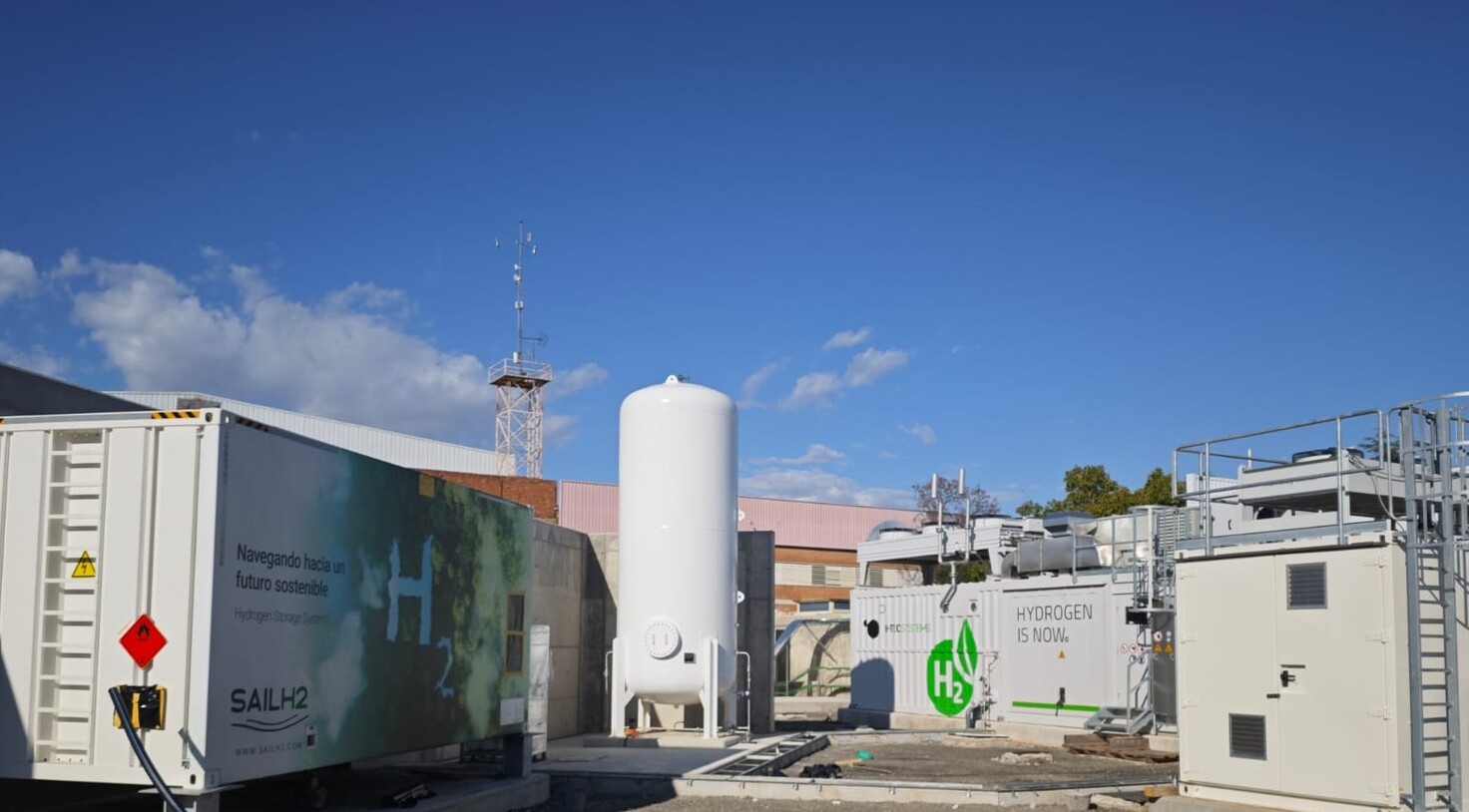
The hydrogen site is primarily divided into two zones:
• Production Zone
• Distribution or refueling zone
The installation is intended to guarantee the supply of green hydrogen for public and private vehicles operating 24/7. The hydrogen will be dispensed to tube trailer trucks transporting hydrogen to other consumption points, as well as injected into the existing natural gas distribution and transmission network.
Regional Strategic Recognition:
The project has been formally integrated into the Junta de Andalucía’s Project Acceleration Unit (Governing Council agreement, July 2022), granting it strategic project status at the regional level . As a result, it benefits from fast-tracked administrative procedures for obtaining the required permits and authorisations.
Details and Technical Specifications of the Project phases
The project is structured in three successive phases , progressively scaling up hydrogen production, storage and distribution capacity. The current financing, through Total Energies Invest, supports Phase 2 (Industry & Gas) , currently Ready-to-Build and targeting commercialisation in Q1 2027. This phase adds 5 MW alkaline electrolysis capacity alongside the existing 1 MW PEM unit, connects to the national gas grid distribution (3 MW), and brings total annual production to 680 tH2 (tons of H2), for a total CAPEX of approximately €9M.
💡 PEM and Alkaline ? These are two complementary technologies used to produce hydrogen from water and electricity: PEM (Proton Exchange Membrane) is well-suited for fast response and small-scale production, while alkaline electrolysis is more cost-effective at larger industrial scale.
| Categories |
Phase 1
Mobility |
Phase 2
Industry & Gas |
Phase 3
Gas |
|
|---|---|---|---|---|
| Project | Works description | Solar plant + electrolyzer + storage + Distribution | + electrolyzer + storage + Distribution | + electrolyzer + Storage + Distribution |
| Project status | COD | RtB | Development | |
| Commercialisation | Jul-26 | Q1 2027 | TBC | |
| Technical | Power (Electrolyzer) | 1 MW | 1+5 MW | 1+5+20 MW |
| Nominal output (Electrolyzer) | 210 Nm3/h (18.9 kg/h) | + 1,000 Nm3/h (89.9 kg/h) | + 3,450 Nm3/h (310 kg/h) | |
| Power (PV) | 1.5 MW | 1.5 MW | 1.5 MW | |
| National grid connection (H2) | 0 MW | 3 MW | 20 MW | |
| Electrolyzer Technology | PEM | + Alkaline | + Alkaline | |
| Maximum annual production (tH2) | 136 | 680 | 2,720 | |
| Distribution |
HRS dual dispenser
350 bar / 700 bar + 1 tube trailer platform 200 bar and 500 bar |
+ H2 distribution network 3 MW (Q1 2027) | + H2 transport network 20 MW | |
| Financial | Total investment amount (CAPEX) | €4,668,100 | €9,049,700 | TBC (Project Finance envisaged with Bankinter) |
Focus on Phase 2 (Total Energies Invest financing):
Phase 2 marks a significant scale-up of the facility, transitioning from local mobility use towards industrial-scale hydrogen production and gas grid injection. The centrepiece of this phase is a 5 MW alkaline electrolyser supplied by HQHP a specialist in hydrogen production technologies, and installed under a full EPC contract delivered by GAS ECO.
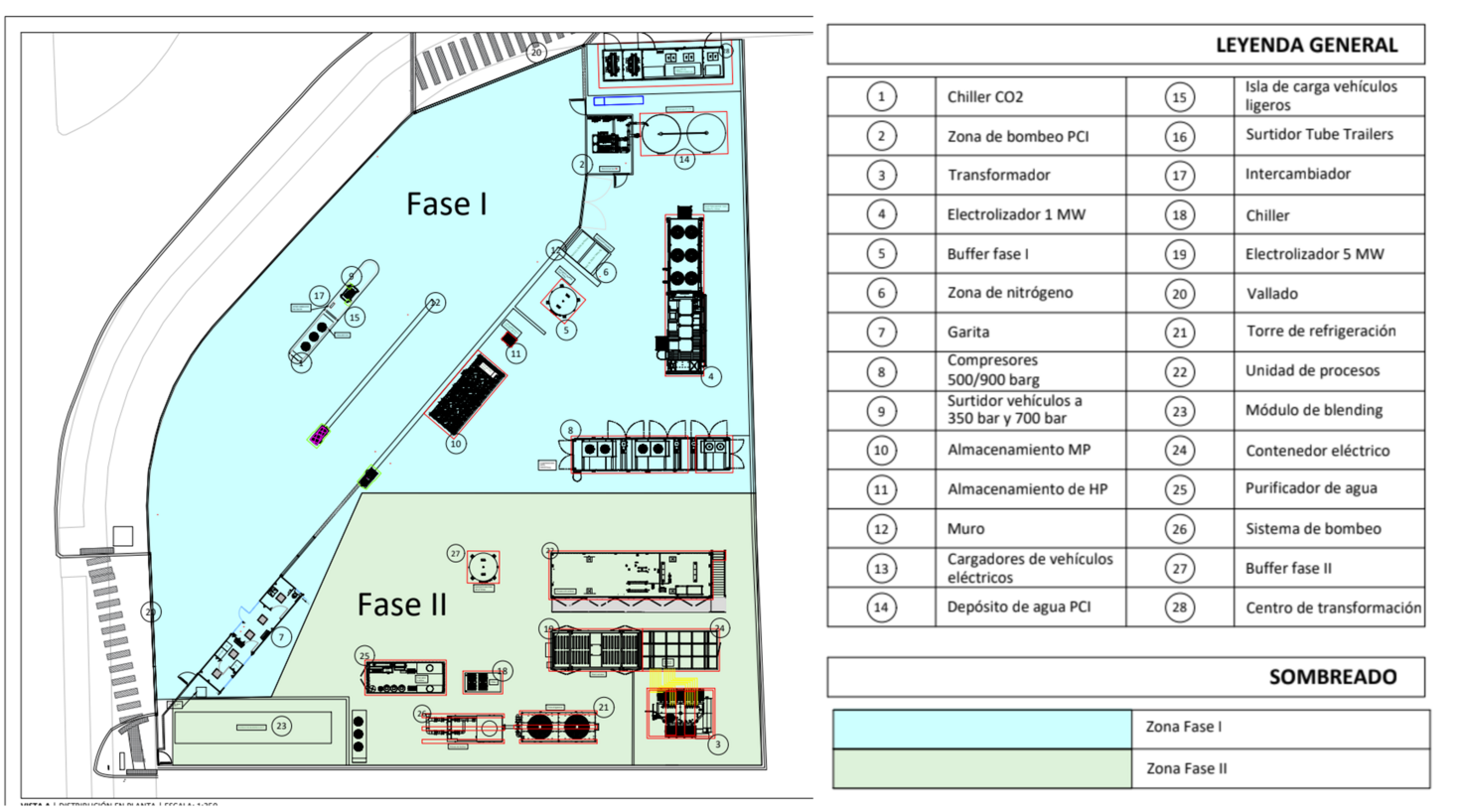
Four key points of this project :
-
Increased production capacity: The 5 MW electrolyser enables significantly larger volumes of hydrogen to be produced, making the facility suitable for industrial use or distribution on a larger scale.
-
Improved operational flexibility: The additional buffer tanks (3 m³ and 25 m³) enable better management of fluctuations between production and consumption, by smoothing out flows and avoiding frequent shutdowns.
-
Strengthening of the compression and storage chain: The addition of a second buffer tank increases the capacity to condition hydrogen at different pressure levels, which is essential for meeting various applications (intermediate storage, distribution, mobility).
-
Increase in storage volumes: Medium and high-pressure storage enables larger reserves to be built up, improving the station’s operational autonomy and its ability to meet both continuous and peak demand.
Grid Distribution — Nedgia Partnership
Hydrogen will be injected into the secured gas distribution network under a 25-year agreement with Nedgia, Spain’s leading gas distribution operator.
| Parameter | Value |
|---|---|
| Minimum flow | 40 Nm³/h |
| Maximum flow | 1,000 Nm³/h |
| Grid connection cost (CAPEX) | €1,279,142 |
| Target commissioning | Q1 2027 |
| Annual operating cost (OpEx) | €6,412/year excl. VAT |
A PPA (Power Purchase Agreement) of +43,800 MWh/year will be required to enable full 24/7 hydrogen production beyond the on-site solar supply.
Engineering, Procurement & Construction scope
The EPC contract covers full engineering, design, technical supervision, and turnkey delivery of the phase, led by GAS ECO, a specialist in hydrogen system integration and infrastructure.
It includes:
• A
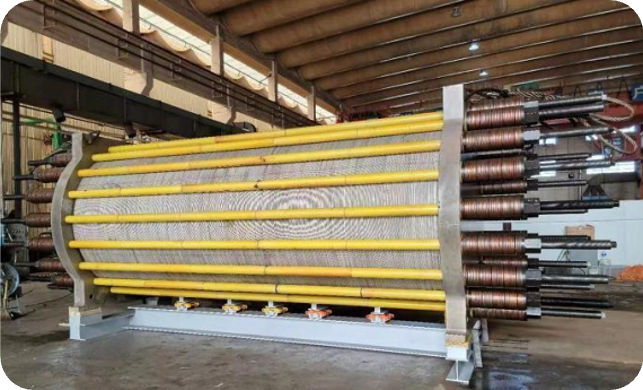
5 MW alkaline electrolyser
developed by HQHP, a leading hydrogen production technology provider
• A
high-pressure compression system
enabling:
•
20 m³ buffer tank
at 30 bar and a
grid injection module
for blending H2 with natural gas in the network
Key stakeholders for constructions
| Service | Company | Details |
|---|---|---|
| Turnkey project |
|
Company specialising in the distribution of industrial gases, with a growing focus on hydrogen. |
| Electrical Installation |

|
Spanish company specialising in construction, infrastructure and industrial projects, with a growing presence in the renewable energy sector. |
| Civil Engineering |

|
A Spanish company specialising in construction, infrastructure and industrial projects, with a growing presence in the renewable energy sector. |
| Electrolyser |

|
Hydrogen Refuelling & Energy Solutions, a Chinese company specialising in Alkaline electrolysers |
What about Spanish Hydrogen Energy Market
Vision 2030:
Spain’s Hydrogen Roadmap (Spanish Ministry of environment - MITECO, 2020) positions green hydrogen as a strategic pillar of the country’s energy transition, targeting sectors that are difficult to electrify. An €8.9 billion investment plan (60 measures) supports a target of 12 GW of electrolyser capacity by 2030 , contributing to the EU’s broader 40 GW objective, backed by Spain’s strong solar and wind resources.
Beyond 2030, MITECO anticipates an accelerating shift toward a hydrogen-based economy, with renewable hydrogen playing a central role in achieving a fully decarbonised energy system by 2050 .
| Indicator | Value | Detail |
|---|---|---|
| Installed electrolyser capacity in Spain by 2030 | 12 GW | National hydrogen development target |
| Estimated production by 2030 | 2.5 Mt/year | of which 1 Mtpa for domestic consumption |
| Industrial sector hydrogen consumption share | 25% | Key end-market for green hydrogen |
| Investment in renewable hydrogen production projects | €8.9 billion | Committed capital across Spain |
| CO2 emissions reduction | 4.6 million tonnes | Expected annual avoided emissions |
Vision 2040 and Market Opportunities:
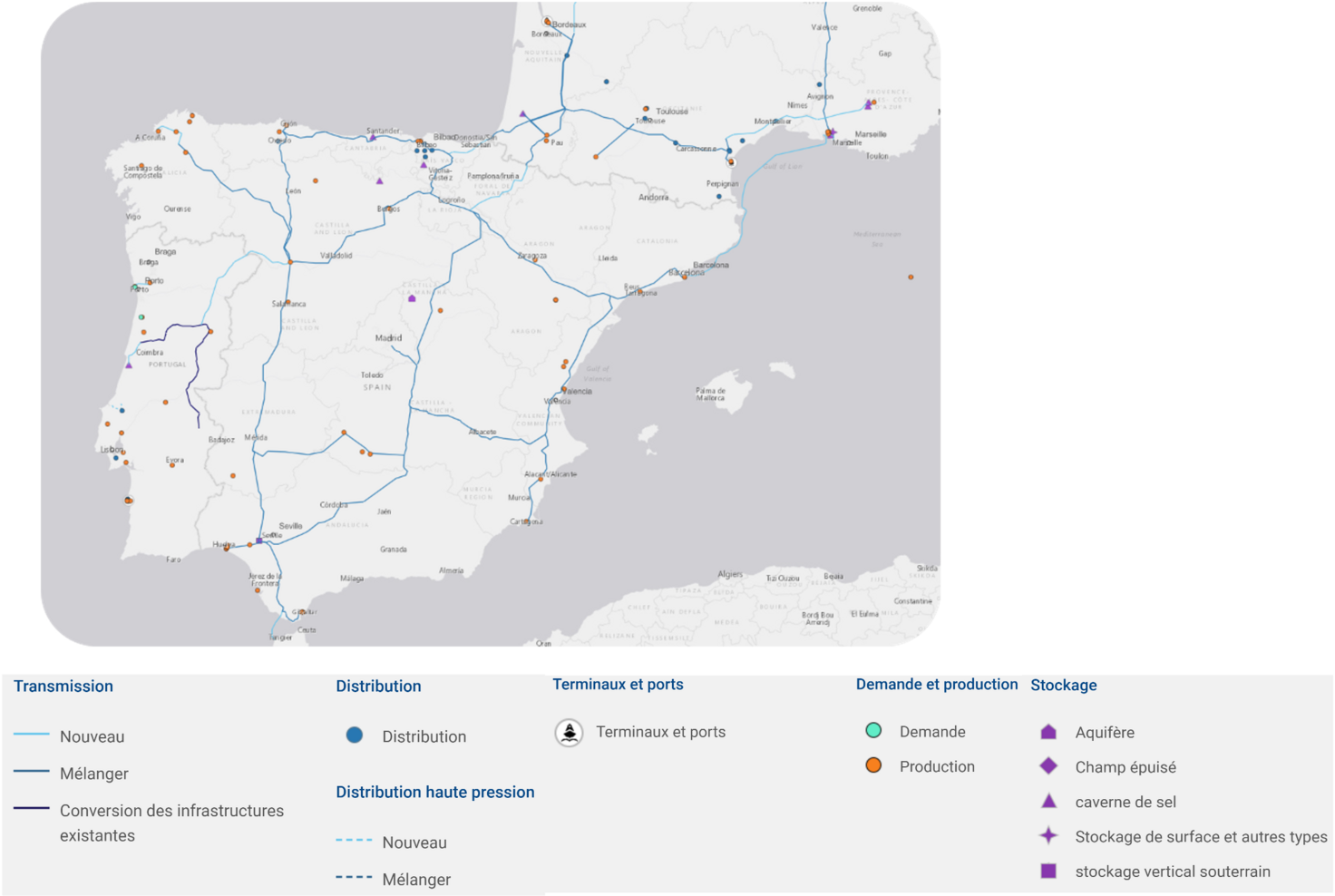
The European Hydrogen Backbone (EHB) is a European industrial initiative aimed at creating a continent-wide interconnected hydrogen transport network. It brings together gas infrastructure operators (TSOs) from several countries, seeking to convert existing gas pipelines and build new ones to connect centres of production, import and consumption of low-carbon hydrogen.
| Indicator | Value |
|---|---|
| Launch | 2020 |
| Members | 30+ European transmission operators |
| Network target by 2040 | 53,000 km |
| Reused gas pipelines | ~60% |
| Geographic coverage | 28 European countries |
In this context, Spain is establishing itself as a future structural hub for green hydrogen in Europe, capitalising on one of the continent’s most competitive renewable energy resources. Finally, the gradual transformation of the national gas network, led in particular by Enagás, is a key driver for accelerating the ramp-up of export capacity. By 2030, Spain aims to transition from being a consumer of grey hydrogen to a net exporter of green hydrogen to Europe.
Focus on Hydrogen
The green hydrogen market is dominated by two complementary electrolysis technologies: alkaline and PEM .
Alkaline is the most mature and widely deployed at industrial scale. Its lower CAPEX and proven robustness make it ideal for continuous, high-intensity applications (chemicals, refining, ammonia). It uses a potassium hydroxide solution as electrolyte, operates at low current density, and has limited flexibility to rapid power fluctuations.
Proton Exchange Membrane (PEM) uses a solid polymer electrolyte, enabling faster response to intermittent renewable energy sources (wind, solar) and high-purity hydrogen output. It is better suited to variable energy profiles but remains more expensive due to its reliance on critical materials and a still-maturing supply chain.
Both technologies work by splitting water molecules into hydrogen and oxygen using direct current applied across two electrodes.
To go further
💡Total Energies Invest article regarding
investment in Hydrogen
💡 Everything you need to know about
green hydrogen
💡 Fiscality for spanish obligations
Interested in this project?
Sign up now to invest responsibly
Project owners
 Spain
Spain
SAILH2 is a company specialising in the development of large-scale green hydrogen projects, primarily aimed at decarbonising industry and heavy transport.
SAILH2 is a company specialising in the development of large-scale green hydrogen projects, primarily aimed at decarbonising industry and heavy transport. The company positions itself as a developer and integrator of renewable hydrogen production projects using electricity generated from renewable energy sources (solar, wind).
SAILH2 develops “Power-to-Hydrogen” projects on an end-to-end basis, i.e.:
- Production of renewable electricity (solar/wind).
- Use of this electricity in electrolysers to produce hydrogen.
- Distribution of this hydrogen for industrial or mobility applications
The main target markets are:
- Heavy industry (steel, chemicals, ammonia)
- Heavy transport (lorries, buses, trains)
- Ports and logistics hubs
- Replacement of grey hydrogen in industry
Track record
Herogra Project (Granada – 0.5 MW)
With the aim of reducing its CO₂ emissions, HEROGRA FERTILIZANTES is a project based on the use of hydrogen as a fuel in thermal processes, relying on solar energy supplied by a photovoltaic installation located on the factory roof to produce renewable hydrogen.
Equipment: – Alkaline electrolyser – Buffer storage to match production to boiler consumption – System for blending hydrogen with natural gas, including pressure and flow regulation and control devices (mixer)
Gedisol Project (Jaén – 1.8 MW)
The hydrogen production and distribution unit is 100% renewable, as the energy used in this process comes from a solar photovoltaic power plant. Part of the electricity is used for on-site consumption, whilst another part is used to produce hydrogen via an on-site electrolyser. The hydrogen produced is then distributed to all consumption points for various intended uses: as a fuel in thermal production processes, as fuel for heavy and light-duty vehicles, as well as for manufacturing processes, etc.
Equipment: – 6 MW photovoltaic power plant – Electrolysers (6 modules of 300 kW) – Hydrogen storage system – Monitoring and control system
Meet the Team
Fernando Isorna Llerena — Founder PhD in Industrial Chemical Engineering. Head of the Energy Laboratory at INTA. Over 30 years of experience in developing green hydrogen projects.
José Fernández de Cabo — Founder Bachelor’s degree in Business Administration and Management. Chief Financial Officer (CFO) of SAILH2. Chairman of FNV.
Eduardo Rituerto García — Founder Telecommunications Engineer. Over 10 years of experience in business development at ABENGOA.
Eduardo López González — Founder PhD in Industrial Engineering. Head of Renewable Energy at INTA. Over 30 years of experience in the development of green hydrogen projects
Eduardo Almagro Blanco — Founder Bachelor’s degree in Law and Business Administration. Chief Executive Officer (CEO) of SAILH2.
Marina Rosales Martínez — Permitting Manager PhD in Industrial Engineering. Over 10 years of experience in permitting management at the Regional Government of Andalusia.
Our analysis
Risk overview
Construction risks
Risk related to errors or defects during assembly that may affect the final quality of the product
Mitigation methods
The project will be carried out by experienced partners, with clearly defined responsibilities, thereby reducing the risk of delivery failures. Some of the partners have also previously worked on the site during Phase 1.
Construction risks
Risk of higher construction costs due to rising raw material prices
Mitigation methods
The project is based on supplier quotations and structured EPC contracts, which help to control the risk of investment cost overruns.
Construction risks
Risk of construction delays or failure to complete the work
Mitigation methods
The project has secured the supply of critical equipment through agreements with identified suppliers, thereby minimising the risk of delays or shortages.
Counterparty risk
Risk associated with emerging markets in which there are only one or a small number of electricity consumers, not necessarily with a strong balance sheet or credit history.
Mitigation methods
The project is operating in a hydrogen market that is still in its early stages, which could lead to volatility in valuations; however, its positioning in a rapidly growing market supported by government policy helps to mitigate this risk in the medium to long term.
Counterparty risk
Risk of counterparty payment default that would jeopardize the project's cash inflows
Mitigation methods
The project is based on identified counterparties and is subject to structured contractual negotiations (off-take, supply), with risk mitigation mechanisms currently being put in place to limit the risk of default in a market that is still taking shape.
Refinancing risk
Credit risk related to the company's ability to refinance and meet its debt obligations.
Mitigation methods
Repayment of the financing depends on the project’s ability to generate revenue through the sale of hydrogen in a market that is still taking shape; refinancing may be necessary, with visibility remaining dependent on the securing of off-take contracts. The project’s cash flows are based on hydrogen sales, exposing the project to liquidity risk in the event of delays in commercial ramp-up or volatility in the selling price per kilogram. The project relies on identified counterparties and is subject to structured contractual negotiations (off-take, supply), with security mechanisms currently being put in place, limiting the risk of default in a market that is still taking shape.
Regulatory risks
Risk of changes in regulations applicable to the sector, involving reductions in subsidies or new taxes with a significant impact on project revenues.
Mitigation methods
The project complies with current regulatory and certification frameworks (particularly regarding green hydrogen), with ongoing monitoring of evolving requirements, thereby minimising the risk of non-compliance despite the regulatory environment still being in its early stages.
Market risk
Risk related to being in a competitive market where new players enter the competition each year
Mitigation methods
The project is well positioned in a rapidly growing market, which limits competitive risk at this stage of development.
Market risk
Risk of falling prices leading to a drop in income.
Mitigation methods
The sales contract locks in prices for the next five years. Other long-term contracts with fixed prices are currently being negotiated.
Operating risks
Risk of poor project operation, faulty workmanship or machine breakdown resulting in poor performance.
Mitigation methods
The project provides for operations to be managed by experienced operators and in accordance with established operational procedures, thereby minimising the risk of malfunctions. The project includes maintenance contracts with equipment suppliers, enabling costs to be forecast and the risk of disruption to be reduced.
Operating risks
Risk of poor yield estimation
Mitigation methods
The production forecasts for the solar power plant supplying part of the energy have been validated by technical studies, incorporating conservative margins to minimise the risk of performance shortfalls.
Operating risks
Risk of delays in the supply chain
Mitigation methods
The project has secured the supply of essential equipment through agreements with selected suppliers, thereby minimising the risk of delays or shortages. The long-term aim is to secure the supply of electricity through power purchase agreements (PPAs).
Operating risks
Technological risk that the system will not perform as expected, or that performance will degrade more rapidly than anticipated.
Mitigation methods
The project is based on tried-and-tested technologies supplied by recognised providers, thereby minimising the risk of failure or obsolescence.
Investing in this participatory financing project involves risks, including the risk of total or partial loss of the capital invested. Your investment is not covered by the deposit guarantee schemes established in accordance with directive 2014/49/EU of the European Parliament and of the Council . Your investment is also not covered by the investor compensation schemes established in accordance with Directive 97/9/EC of the European Parliament and of the Council . Return on investment is not guaranteed. This is not a savings product, and we recommend that you not to invest more than 10% of your net assets in participatory finance projects. You may not be able to sell the investment instruments when you wish. If you are able to sell them, however, you may incur losses.